Skip to content

When you shop for a silk comforter, you might struggle to choose between mulberry silk and wild golden silk. Both are silk, but they’re very different in quality, how they work, and how much they cost. This is because the silkworms that make them are different, and the way we process the silk is different too. Most people know mulberry silk is “soft and smooth,” but not many know wild golden silk gives you a lot for your money. Which one is right for you? Let’s break down their key differences, how they work, and how to pick one—so you can find the best fit for your needs.
I. Mulberry Silk vs. Wild Golden Silk: Big Differences From Start to Finish

To know which is worth buying, first you need to understand their main differences. These aren’t “good vs. bad”—they’re just “different.” And those differences change when each silk works best.
1. The Silkworms & Where They Grow: Domestic vs. Wild
The differences start with the silkworms themselves and how we raise them:
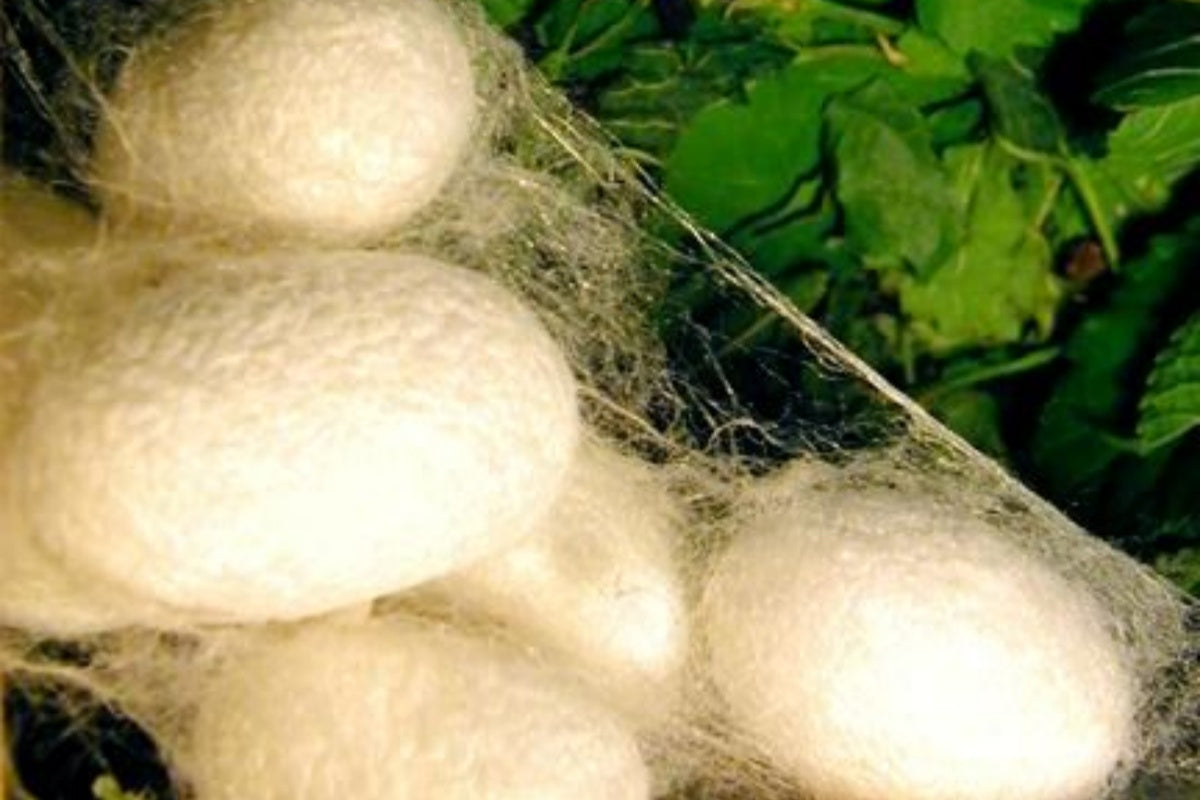
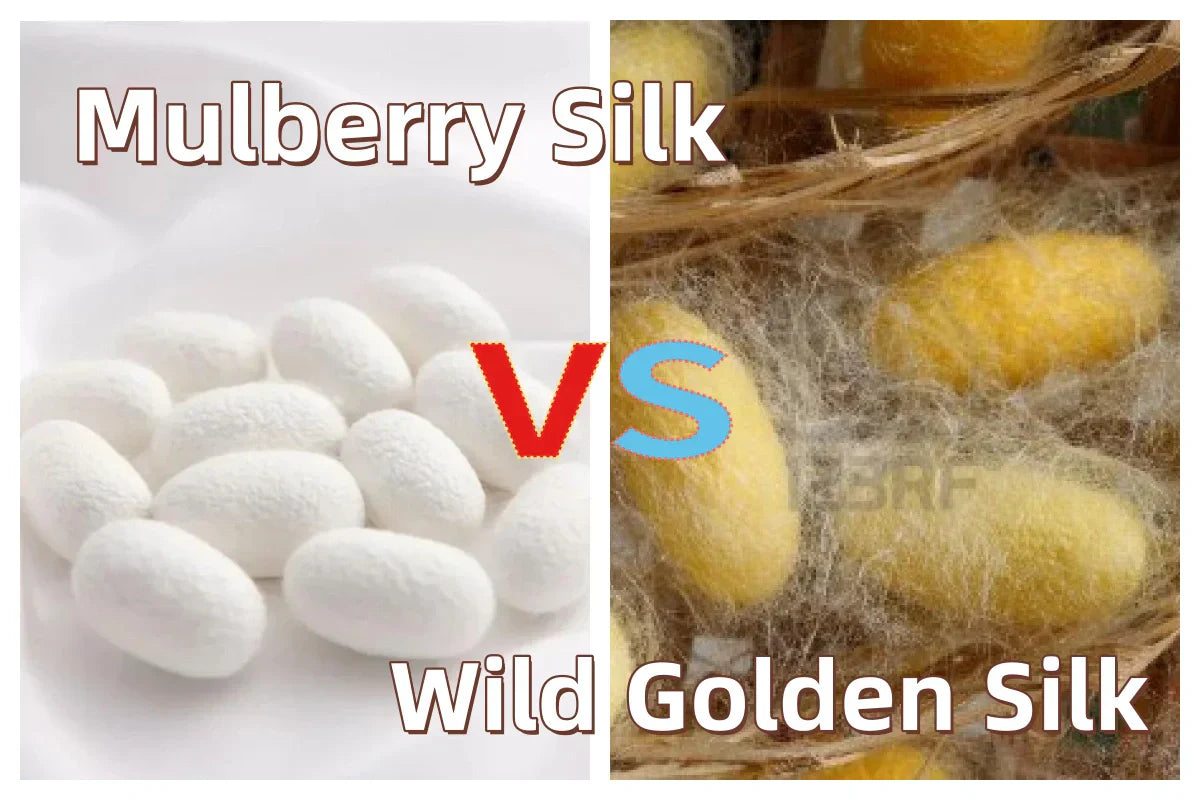
- Mulberry Silk (Domestic Silk): It comes from Bombyx mori silkworms—these are silkworms we’ve raised by hand for thousands of years. They only eat mulberry leaves, and most are raised in regions known for high-quality silk production worldwide. Raising them needs care: farmers use controlled environments to manage temperature and humidity, and they check on the silkworms every day—people even call them “silkworm babies.” Their cocoons are a natural, see-through white. We don’t need to use chemicals on them, so they’re perfect for making silk comforters.
- Wild Golden Silk (Tussah Silk): It comes from Antheraea pernyi silkworms—these are more like wild silkworms, found in areas with abundant oak trees. They eat oak leaves (also called tussah leaves) and mostly live outside. This makes them stronger and harder to harm. Tussah silkworms are bigger than mulberry silkworms. Their cocoons are dark brown or grayish-green. If we use them directly for comforters, they look and feel bad. So most tussah silk is bleached (often with chemicals to make it whiter), and it’s better for machine-made comforters because of how its fibers work.
2. Key Differences: How They Look & Feel
Beyond where they come from, the two silks look and feel very different—and that changes how nice they are to use:
|
What We Compare
|
Mulberry Silk
|
Wild Golden Silk
|
|
Color of the Silk
|
Natural milky white—sometimes with soft pale green or yellow hints. It shines gently.
|
Natural tawny (light brown) or grayish-green. When bleached, it looks “dead white.”
|
|
The Fibers
|
Long fibers (one strand can be hundreds of meters long). They stretch well and don’t break easily—even if you stretch them 10 times their size.
|
Short fibers (most are only tens of centimeters long). They don’t stretch well, break easily.
|
|
How It Feels
|
Smooth and soft. It’s gentle on your skin—no heavy feeling, no hard lumps.
|
A little dry and rough. When you press it, you feel a slight “hardness.” It can form lumps if you use it for a long time.
|
|
How It’s Made Into Comforters
|
Best for hand-made comforters (hand-stretching keeps the fibers whole, so the comforter is fluffy).
|
Best for machine-made comforters (short fibers are hard to shape by hand).
|
II. How They Work: Each Is Good for Different Needs
The best thing about a silk comforter is that it’s “natural, breathable, soaks up moisture, and keeps you warm without being heavy.” But mulberry silk and wild golden silk are good at different things—so pick one based on how you’ll use it.
1. Mulberry Silk: Best If You Want “Super Comfort”
Mulberry silk is all about feeling good. It’s perfect if you care a lot about how your comforter feels when you sleep:
- Good for sensitive skin: It’s a natural protein fiber—no chemicals added. So it’s less likely to make you itchy or allergic. Great for people with sensitive skin, kids, or older adults.
- Fluffy and light: Its fibers stretch well, especially in hand-made comforters. It’s only 1/3 the weight of a cotton comforter. It fits your body but doesn’t feel heavy—so you stay warm in winter without feeling squashed.
- Breathable (great for humid places): It has tiny holes that soak up sweat and let it out fast. So you won’t feel sticky in summer, and your skin won’t get dry in winter. Perfect for humid areas, where rainy seasons or muggy weather is common.
But mulberry silk has downsides: it’s not as warm as wild golden silk. And its fibers are delicate—you can’t wash it easily, and too much sun makes it brittle. You need to take care of it.
2. Wild Golden Silk: Best If You Want “Value & Durability”
Wild golden silk isn’t as soft as mulberry silk, but it’s cheap and lasts longer. It’s a practical choice:
- Great for your budget: It costs about half as much as mulberry silk. If you don’t want to spend a lot but still want a silk comforter (with its breathable, moisture-soaking benefits), this is perfect. Many shoppers care about getting more for their money.
- Lasts longer: It’s better at handling water and sun. If you spill something on it, it’s easy to clean. And it doesn’t get brittle even if it’s in the sun a lot. So it’s low-maintenance—good for busy families or guest rooms.
- Warmer: Its fibers are thicker. It’s not as fluffy as mulberry silk, but it keeps you warmer. Great for cold, dry areas in winter. Also good if you care more about warmth than softness.
Note: Most wild golden silk is bleached with chemicals. If you have bad allergies, be careful. Also, its short fibers can form lumps—you need to air it out and pat it sometimes to keep it fluffy.
III. How to Choose: Think About Your Budget & Needs
There’s no “best” silk comforter—only the one that’s best for you. The key is to know what you need most: do you want “comfort,” or do you want “a good deal and something that lasts”?
1. Choose Mulberry Silk If:
Pick mulberry silk if these fit you, and you have enough money (mulberry silk comforters usually cost over \(200; queen-size ones are often more than \)400—this matches prices for nice bedding):
- You want the most comfortable sleep possible. You care about softness and lightness, or you/your family have sensitive skin, are kids, or are older.
- You live in a humid area. You need a comforter that soaks up moisture and stays light—so it doesn’t get lumpy during rainy seasons.
- You want natural, chemical-free stuff. You don’t like the idea of bleaching chemicals, and you prefer things that are barely processed (this is a big trend for eco-friendly home goods).

2. Choose Tussah Silk If:
Pick tussah silk if you’re on a budget (tussah silk comforters usually cost \(100–\)200) or want something practical and durable:
- You want to try silk bedding but don’t want to spend much. You’re new to silk comforters, and you just need the basic benefits (breathable, soaks up moisture).
- You live in a cold area. You care more about warmth than softness, and you need a comforter that’s easy to clean and air out (like for freezing winters or cold snaps).
- You need something low-maintenance. The comforter will get used a lot (like in a rental house or a kid’s room), and you don’t have time to take extra care of it.

Conclusion: Choose What You Need, Not What Others Say
Mulberry silk and tussah silk aren’t “better or worse”—they’re for different people. Mulberry silk is for people who want comfort and have the budget for it. Tussah silk is for people who want a good deal and something that lasts.
When you shop, don’t just believe “mulberry silk is the best.” And don’t ignore tussah silk because it’s a little rough. Just think about what you need most (comfort? warmth? budget?) and where you live (humid? cold?). That way, you’ll pick a silk comforter that’s truly worth buying—and every night’s sleep will be cozy.