Skip to content


If you track your nightly rest with a smart ring or watch, you’ve likely spent mornings staring at your app, asking: What is the difference between core and deep sleep? You might clock a full night in bed, but if your data shows you’re stuck in the lighter stages, your body isn’t actually rebuilding.
Learning how to get 8 hours of sleep in 4 hours is not a myth; it is a matter of optimizing your "Sleep Density." To master this, you must understand what's the difference between rem core and deep sleep and identify the environmental factors that are sabotaging your transition into the restorative phases.
5 Signs You’re Not Getting Enough Deep Sleep
Even without a digital tracker, your physiology provides clear feedback. These signs you're not getting enough deep sleep are red flags that your sleep architecture is fractured:
-
Morning Inertia: You feel "glued" to the bed for the first 30 minutes after waking.
-
Cognitive Lag: You find it difficult to recall names or complex data points during your first meeting.
-
Low HRV (Heart Rate Variability): Your nervous system remains in a "fight or flight" state rather than "rest and digest."
-
Sugar Cravings: A lack of profound rest disrupts ghrelin and leptin, making you crave high-carb energy boosts.
-
Emotional Fragility: You find yourself more irritable or less resilient to daily stressors.
The Difference Between Core and Deep Sleep: The "Cleanup" Phase
To fix your fatigue, you must understand the difference between core and deep sleep.
-
Core Sleep: This stage (comprising Stage 1, Stage 2, and REM) is vital for emotional processing and memory consolidation. However, it does very little for physical tissue repair or brain detoxification.
-
Deep Sleep (Slow Wave Sleep): This is the "Holy Grail" of human performance. This is when the glymphatic system flushes metabolic waste from your brain.
If you want to know how to sleep 8 hrs in 4 hours, you must find a way to cut the "fluff" of excessive light core sleep and force your brain into the deep, slow-wave state faster.
The Silent Saboteur: Static Interference
Why do so many people struggle to transition from light core sleep to deep sleep? One overlooked factor is the electrical environment of your bedding.
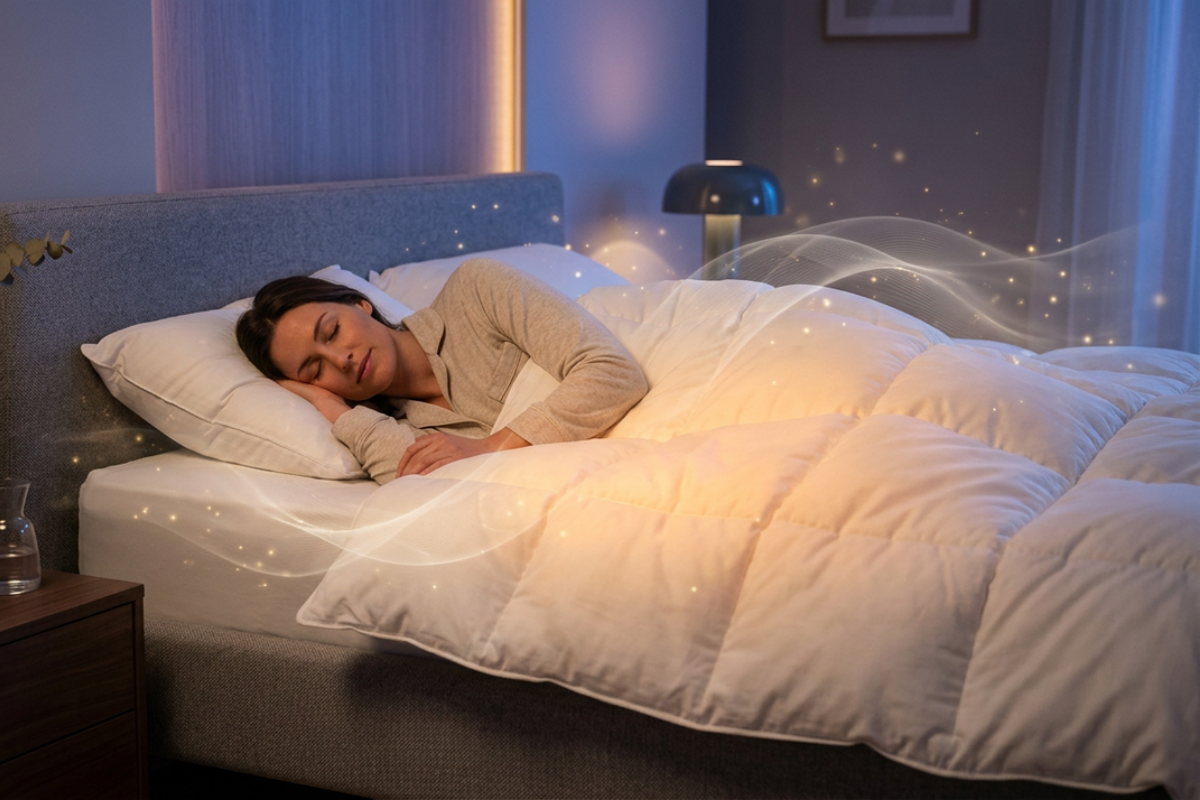
Standard synthetic duvets act like a giant capacitor, building up static electricity as you move. These micro-shocks act as a "silent alarm clock" for your nervous system. They don't wake you up fully, but they keep your brain in a state of high-alert core sleep.
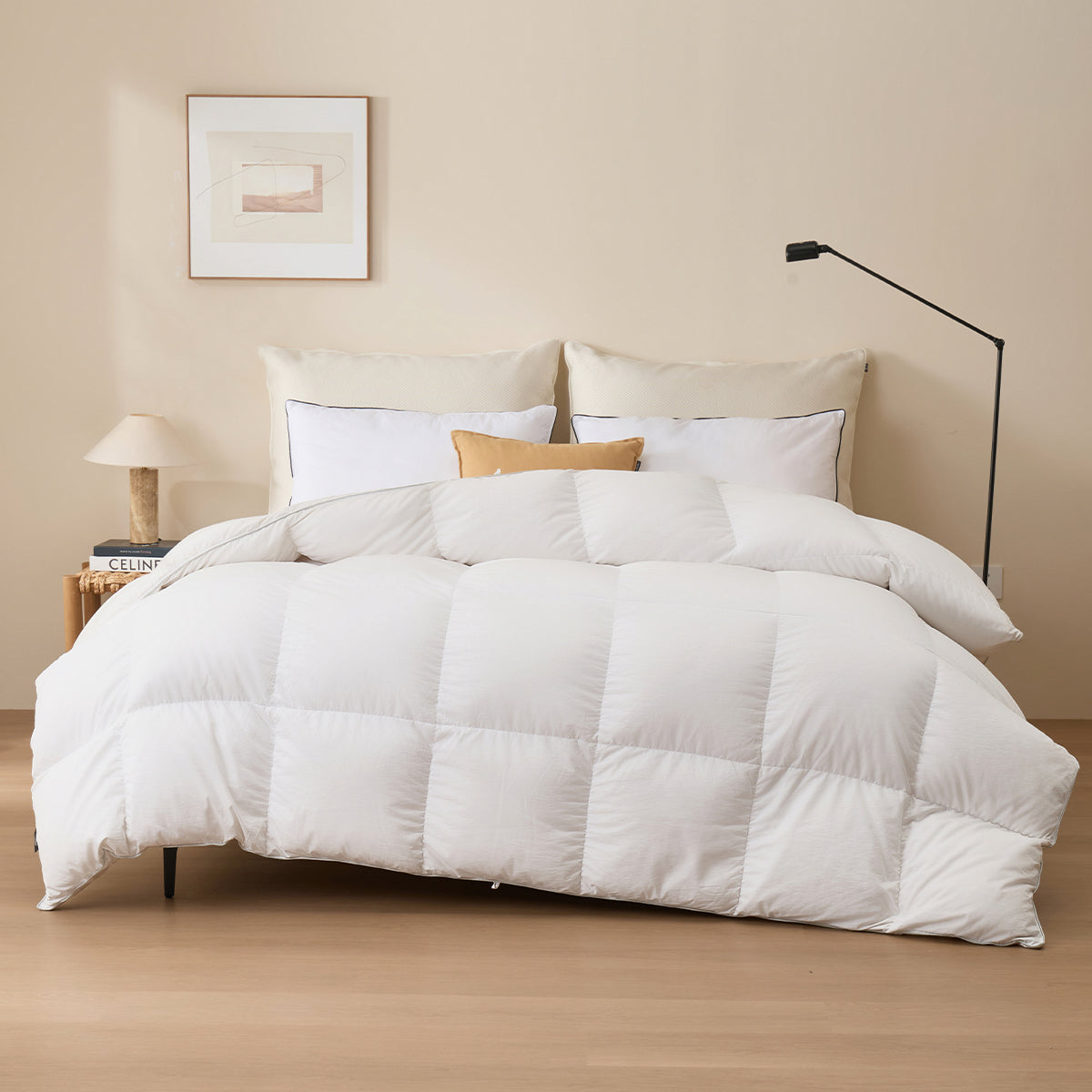
This is where an anti-static duvet becomes a performance tool. By using Graphene’s hyper-conductivity to dissipate these charges, you allow your nervous system to relax, facilitating the seamless drop into profound rest.
How to Sleep in 8 Hours in 4 Hours: The Blueprint
If your schedule is demanding and you need to know how to sleep in 8 hours in 4 hours, you must treat your bedroom like a recovery laboratory:
-
Ground Your Sleep: Utilize an anti-static duvet to prevent the nervous system spikes that trap you in light sleep.
-
Optimize Thermal Flow: Instead of dry electric heat, use far-infrared materials to maintain a stable internal temperature.
-
Master the Transition: Understanding what's the difference between core sleep and deep sleep allows you to prioritize the quality of your cycles over the quantity of hours.
Conclusion: Quality Over Duration
Understanding what's the difference between core and deep sleep is the first step toward high-performance living. You don't necessarily need more time in bed; you need more efficiency while you are there.
By integrating an anti-static duvet into your routine, you are no longer just "sleeping"—you are engineering a more dense, more effective recovery period.