Skip to content


Confused by “baffle box” vs. “sewn-through” when buying a down comforter? You’re not alone. Both lock down in place—but they drastically impact three things that matter most: warmth, fit, and that luxe feel you want in a top-tier comforter.
To understand the difference, start with down itself. Down is soft, cluster-like feathers from the bellies of geese and ducks. It’s an animal-based protein fiber. Each down cluster has millions of tiny triangular air pockets. These pockets expand and shrink when the temperature changes. They trap your body heat and keep cold air out. That’s why down comforters are both warm and light. The way a comforter is made (its construction) either makes the most of these benefits or weakens them.

I. Traditional Sewn-Through Construction: Plump Look, But “Hot and Cold Spots”

Sewn-through construction is an old way to make down comforters. The main idea is to “hold down flat.” Here’s how it works:
1. Down is spread evenly between two layers of fabric.
2. A machine sews the top and bottom fabric together directly. This makes small, separate square pockets.
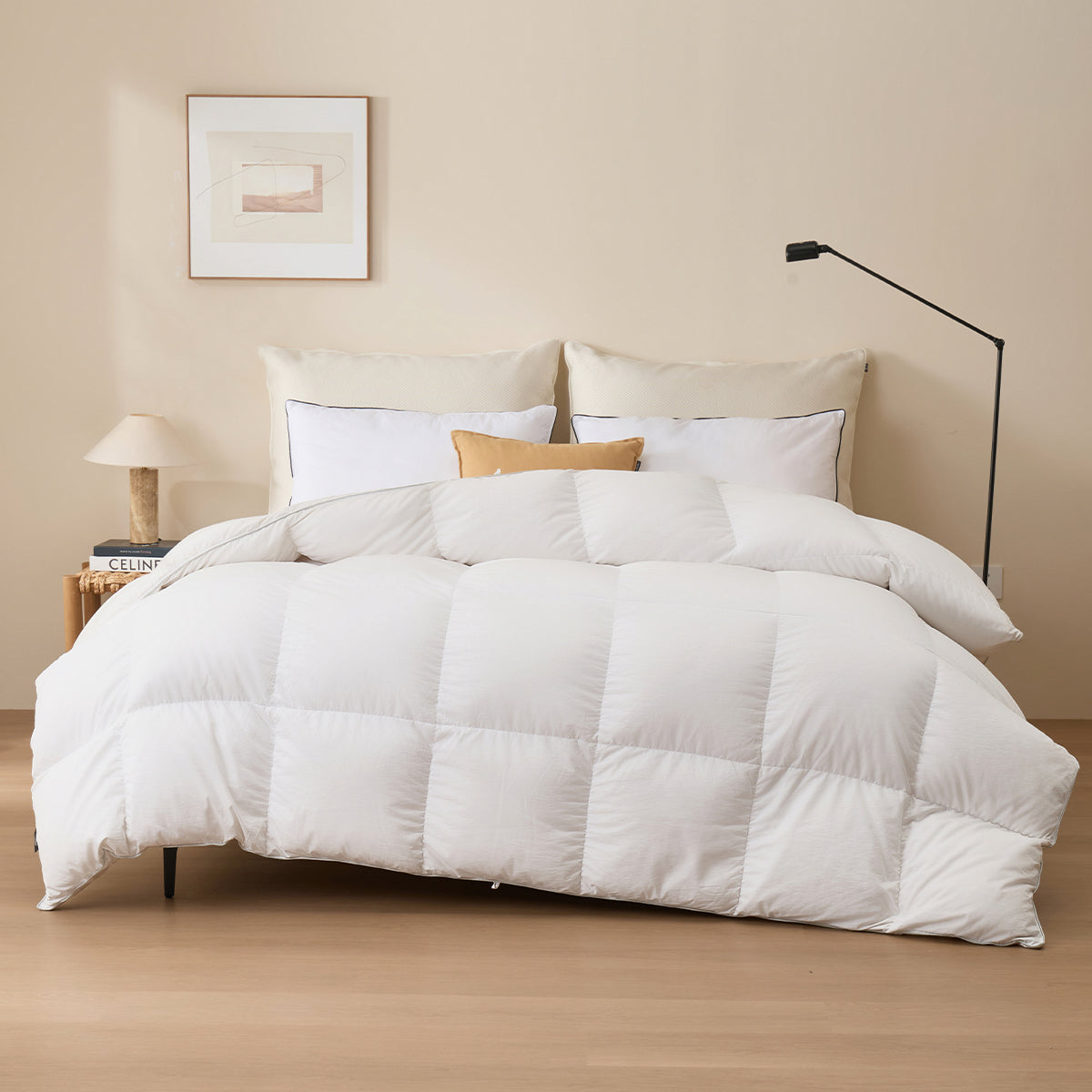
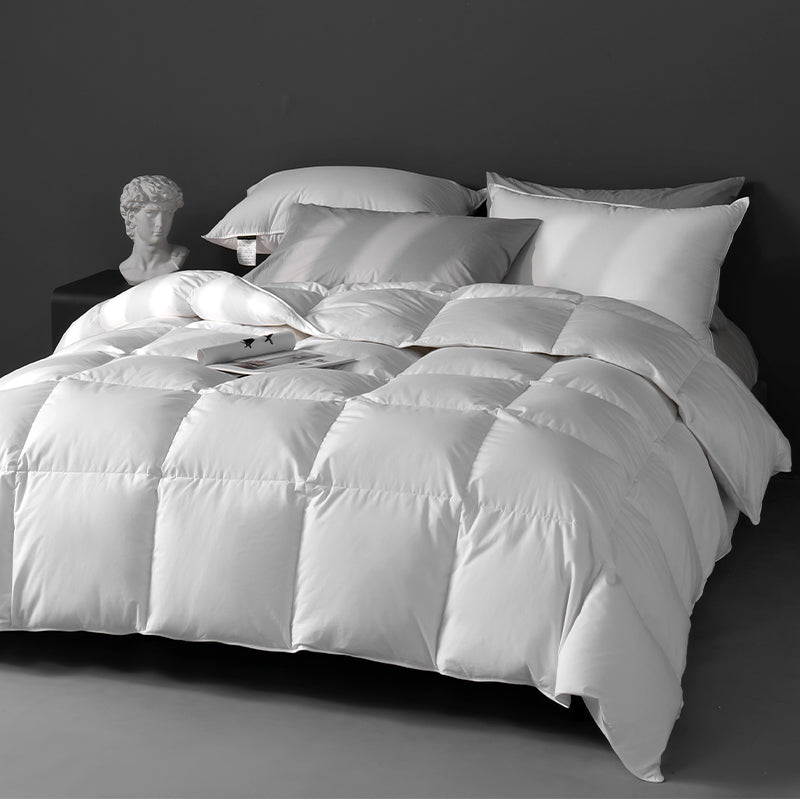
Sewn-through comforters look nice. The squares are plump and round. The stitches are neat and clear. They look “thick and full.” This method is cheap to use because it’s been around so long. You used to see these comforters everywhere.
But this “flat sewing” causes a problem with down’s natural “loft” (how fluffy it is). Good down is very fluffy. When you fill the squares, they puff up like small balloons. This makes the comforter’s surface uneven:
The puffy squares are too fluffy. They don’t hug your body’s curves.
Worst of all: the stitched lines between squares have no down at all. These lines are “cold seams”.
When you cover up with a sewn-through comforter, these cold seams touch your skin. You’ll feel “hot spots” (where the down is) and “cold spots” (the seams). The down in the squares keeps you warm, but the seams let cold air in.
Many people fix this by adding an extra blanket on top. The blanket weighs the down down and closes gaps in the cold seams. But this ruins the best thing about down comforters—they’re light and don’t press down on you. The comforter stops being flexible and easy to move with. It becomes heavy. You lose the reason you bought a down comforter in the first place.
II. Baffle Box Construction: 3D Design for Even Warmth

Baffle box construction was made to fix the problems of sewn-through construction. Its big innovation? “It breaks the flat surface to make 3D space".
Unlike sewn-through construction (which sews top and bottom fabric directly), baffle box uses extra fabric. Thin strips of fabric (the same material as the comforter) are added between the two layers. These strips stand up along the edges of each square. They turn the flat squares into connected “3D boxes”.
This 3D box design changes how down sits in the comforter—for the better:
1. Down spreads more evenly: The standing fabric strips stop down from moving around too much. Gravity or pressure (like when you sleep) won’t push down to the bottom or edges of the squares. Every part of the comforter has the same amount of down. No more “too thick” or “too thin” spots.
2. Even thickness, better fit: The “balloon” puffs from sewn-through comforters are gone. Baffle box comforters are the same thickness all over. Their surface is flatter. This means they hug your body better—around your neck, shoulders, and waist. There are fewer gaps between you and the comforter. Cold air can’t seep in as easily.
3. Keeps down fluffy, no extra weight: The 3D design holds down in place without squishing it. The tiny air pockets in the down still work—they expand and shrink with temperature. You don’t need an extra blanket. The even down and tight fit keep you warm. It’s the best of both worlds: warm and light.
III. Key Differences: Baffle Box vs. Sewn-Through

|
What to Compare
|
Sewn-Through Construction
|
Baffle Box Construction
|
|
How It’s Made
|
Top and bottom fabric sewn directly; flat squares
|
Extra standing fabric strips between layers; 3D boxes
|
|
Down Spread
|
Squares are plump, but no down in stitched lines; uneven
|
Even down in every 3D box; no cold seams
|
|
How It Keeps You Warm
|
Relies on down in squares; cold seams let cold air in
|
Even down + fits tight; no gaps for heat to escape
|
|
Fits Your Body
|
Puffy squares don’t hug your curves
|
Same thickness all over; fits your body’s shape
|
|
How It Feels to Use
|
Needs an extra blanket; not light anymore
|
No extra blanket needed; warm and light
|
|
Best For
|
Tight budget, wanting a plump look, or using it for a short time (like spring)
|
Wanting comfort and warmth for a long time; good for people who get cold easily or hate heavy bedding
|

IV. Buying Tips: Pick the Right One for You
1. Choose Baffle Box If: You Want the Most Comfort and Warmth
If you love that down comforters are “warm but light”, baffle box is better. This is especially true if you’ll use it all winter, or if you don’t like heavy blankets pressing on you. It keeps you warm evenly and fits well. It’s great for older adults, kids, or anyone who gets cold easily.


2. Choose Sewn-Through If: You’re on a Budget or Need It for a Short Time
If you don’t have a lot of money, or if you just need a thin comforter (like for spring or autumn), sewn-through works. But remember: You’ll probably need a thin blanket on top to fix the cold seams. Don’t press too hard on the down, though—this will make it less fluffy.
Final Thought
The way a down comforter is made decides if it works well. Sewn-through looks nice and is cheap, but it’s less warm and comfortable. Baffle box uses 3D design to make down work its best. It’s an upgrade that fits how people sleep now. Pick the right construction, and your down comforter will be both “evenly warm” and “comfortably light”.

Click here to visit APSmile homepage: Down Duvet|APSMILE

Read More: