Direkt zum Inhalt

The bedding aisle can be overwhelming with terms like down, fiberfill, and feather fiber thrown around. Consumers often struggle to understand the real differences between these materials and which one is truly worth their investment.
Today, we'll break down the science behind these three popular insulating materials to help you make an informed decision and avoid the common pitfalls in the marketplace.
I. Material Origins and Basic Characteristics
1.1 Down: Nature's Perfect Insulator
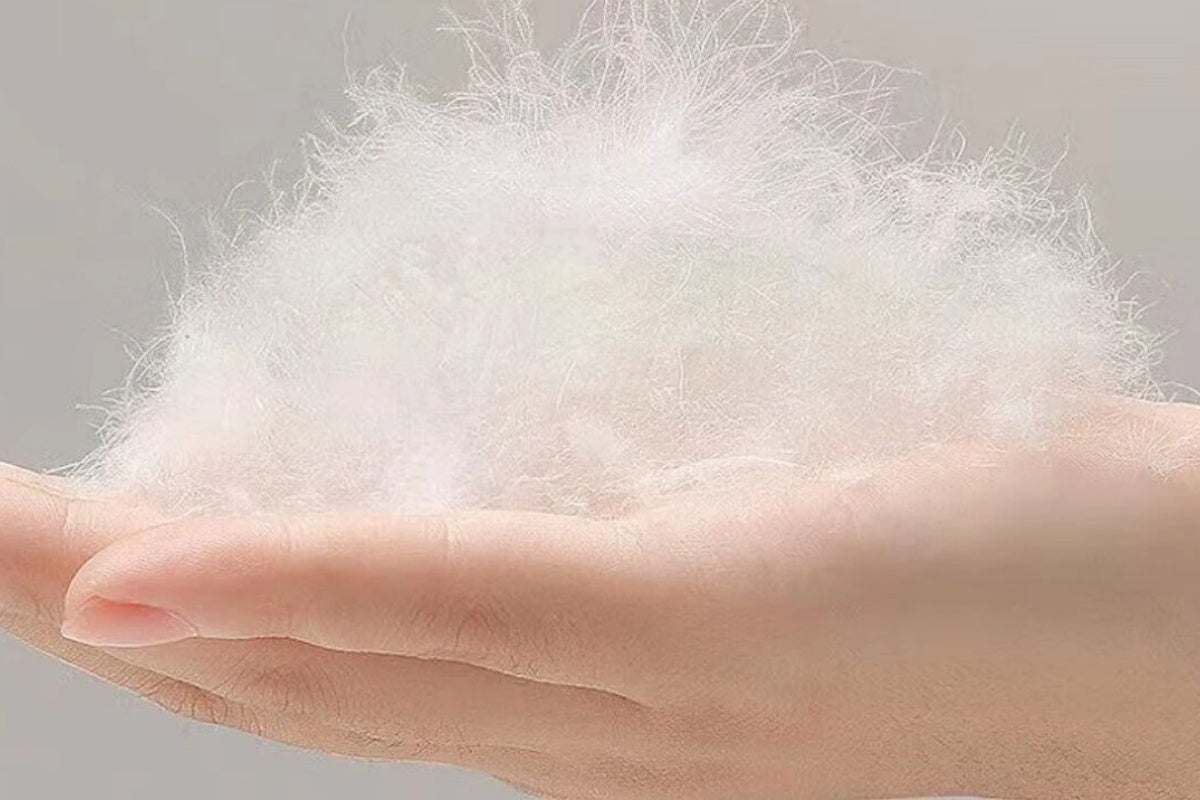
Material Source: The soft, fluffy undercoating of waterfowl (geese or ducks), nature's most efficient thermal regulator
Structural Features:
- Three-dimensional cluster structure with filaments radiating from a central core
- Creates millions of tiny air pockets that trap heat
- Exceptionally lightweight yet incredibly warm
Quality Grades:
- Goose Down: Larger clusters (over 20mm in diameter), higher loft, superior insulation
- Duck Down: Smaller clusters, shorter filaments, slightly less insulating
- Premium Choice: Siberian White Goose Down, sourced from cold climates for maximum quality
1.2 Fiberfill: The Synthetic Alternative
Material Source: Man-made polyester fibers produced through chemical processes
Structural Features:
- Linear fiber structure lacking the three-dimensional properties of down
- Limited air-trapping capability compared to natural down
- Uniform but less efficient insulation
Common Types:
- Polyester Fiber: The most widely used synthetic filling
- Hollow Fiber: Attempts to mimic down's structure but falls short
- Microfiber: Designed for softer feel but still lacks down's insulating power
1.3 Feather Fiber: The Controversial Option
Material Source: Typically byproducts from down processing or low-quality feathers glued together
Structural Features:
- Short, irregular fibers with no consistent cluster structure
- Prone to clumping and uneven distribution
- Often contains hard quill parts that can be uncomfortable
Quality Concerns:
- May contain harmful adhesives in low-quality products
- Inconsistent filling distribution
- Questionable cleanliness and processing standards
II. Insulation Performance Comparison
2.1 The Science of Warmth
The Down Advantage:
- Natural Air Pockets: Millions of tiny gaps create a thermal barrier that locks in body heat
- Dynamic Regulation: Adjusts to body temperature for optimal comfort
- Weight-to-Warmth Ratio: Provides exceptional warmth without the heavy weight
Fiberfill Limitations:
- Dense Structure: Fewer air pockets mean less effective insulation
- Static Performance: Lacks the ability to adapt to temperature changes
- Weight Disadvantage: Requires more material to achieve similar warmth levels
Feather Fiber Issues:
- Structural Deficiencies: Incomplete cluster structure fails to trap air effectively
- Performance Degradation: Loses insulating power quickly with use
- Inconsistent Warmth: Hot and cold spots due to uneven distribution
2.2 Quantitative Comparison Data
|
Performance Metric
|
Down
|
Fiberfill
|
Feather Fiber
|
|
Insulation Power
|
★★★★★
|
★★☆☆☆
|
★☆☆☆☆
|
|
Fill Power
|
600-1000 CUIN
|
200-400 CUIN
|
150-300 CUIN
|
|
Weight Efficiency
|
1.5x warmer per ounce
|
Standard
|
0.8x less effective
|
|
Compression Recovery
|
Excellent
|
Fair
|
Poor
|
2.3 Real-World Performance
Down's Superiority:
- Maintains warmth even in sub-zero temperatures (-20°C)
- Provides 1.5x more warmth than fiberfill of the same weight
- Creates a cozy, cloud-like environment without feeling restrictive
Fiberfill Challenges:
- Noticeable warmth loss in temperatures below freezing
- Requires thicker bedding to achieve comparable comfort
- Prone to cold spots and inconsistent heating
Feather Fiber Problems:
- Unreliable insulation with significant temperature variations
- Rapid performance decline after initial use
- Lacks the enveloping warmth of quality down
III. Comfort and Health Considerations
3.1 Tactile Experience
Down's Luxurious Feel:
- Silky Smooth: Cloud-like texture perfect for sensitive skin
- Body-Hugging: Conforms to body contours for personalized comfort
- Weightless Warmth: Provides exceptional insulation without feeling heavy
Fiberfill's Texture Issues:
- Plasticky Feel: Synthetic texture lacks natural softness
- Loss of Loft: Compacts over time, becoming hard and uncomfortable
- Oppressive Weight: Requires more material for warmth, leading to discomfort
Feather Fiber's Comfort Problems:
- Prickly Sensations: May contain hard quill fragments
- Uneven Feel: Lumpy texture due to inconsistent fiber distribution
- Odor Concerns: May retain unpleasant smells if not properly processed
3.2 Breathability and Health
Down's Health Benefits:
- Superior Breathability: Allows moisture to escape while retaining warmth
- Natural Material: No chemical additives, eco-friendly and sustainable
- Hypoallergenic Options: Premium down can be treated for allergy sufferers
Fiberfill's Breathability Issues:
- Moisture Retention: Traps sweat and humidity, leading to discomfort
- Chemical Residues: May contain harmful substances from manufacturing
- Static Problems: Generates static electricity in dry environments
Feather Fiber's Health Risks:
- Cleanliness Concerns: Byproduct sourcing raises hygiene questions
- Adhesive Residues: Low-quality products may contain toxic glues
- Allergy Triggers: Often contains dust and allergens
3.3 Certification Standards
Down's Trusted Certifications:
- IDFL Certification: International Down and Feather Laboratory verification
- OEKO-TEX Certification: Ensures safety for babies and sensitive individuals
- Cleanliness Standards: Medical-grade processing eliminates odors and allergens
Fiberfill's Certification Status:
- Limited Standards: No universal quality benchmarks
- Variable Quality: Ranges from food-safe to industrial-grade materials
- Environmental Concerns: Non-biodegradable and often petroleum-based
Feather Fiber's Certification Gaps:
- Lack of Oversight: No industry-wide quality standards
- Regulatory Challenges: Difficult to monitor production practices
- Consumer Protection Issues: Hard to define and enforce quality standards
IV. Durability and Cost Analysis
4.1 Longevity Considerations
Down's Exceptional Durability:
- Lifespan: Premium down comforters can last 10+ years with proper care
- Maintenance: Simple airing and fluffing maintains performance
- Value Retention: Continues to provide excellent service over time
Fiberfill's Limited Lifespan:
- Effective Life: Typically 2-3 years before significant degradation
- Compression Issues: Loses loft and insulating power with use
- Warmth Decline: May lose 30%+ of insulation after 3 years
Feather Fiber's Short Lifespan:
- Replacement Needed: Usually requires replacement after 1-2 years
- Rapid Degradation: Loses structure and insulating power quickly
- Poor Value: Low initial cost offset by frequent replacements
4.2 Care and Maintenance
Down's Easy Care:
- Machine Washable: Many premium down products can be laundered at home
- Professional Options: Dry cleaning recommended every 2-3 years
- Simple Upkeep: Regular airing and fluffing maintains performance
Fiberfill's Care Challenges:
- Washing Problems: May clump and lose shape in the wash
- Drying Difficulties: Requires thorough drying to prevent mildew
- High Maintenance: Needs careful handling to maintain performance
Feather Fiber's Care Issues:
- Washing Risks: Low-quality products may disintegrate in water
- Drying Problems: Uneven drying leads to mildew and odor
- Limited Care Options: Few effective maintenance strategies
4.3 Total Cost of Ownership
|
Cost Factor
|
Down
|
Fiberfill
|
Feather Fiber
|
|
Initial Investment
|
\(200-\)1,000+
|
\(50-\)200
|
\(30-\)100
|
|
Lifespan
|
10+ years
|
2-3 years
|
1-2 years
|
|
Annual Cost
|
\(20-\)100
|
\(20-\)70
|
\(20-\)50
|
|
Comfort Value
|
Excellent
|
Fair
|
Poor
|
|
Health Benefits
|
High
|
Moderate
|
Low
|
Long-Term Value Conclusion:
- While down requires higher upfront investment, its longevity makes annual costs comparable
- When factoring in comfort and health benefits, down offers superior overall value
- Low initial prices often mask higher long-term costs due to frequent replacements
V. Ideal Users and Applications
5.1 Down's Perfect Customers
Best For:
- Luxury Seekers: Those who prioritize comfort and quality
- Health-Conscious Buyers: Individuals with allergies or sensitive skin
- Long-Term Investors: Consumers looking for lasting value
- Cold Climate Dwellers: Anyone needing reliable winter warmth
Recommended Uses:
- Winter Bedding: Unmatched insulation for cold weather
- Year-Round Comfort: Breathable enough for all seasons
- Luxury Gift: Perfect for weddings or special occasions
- Guest Room Upgrade: Impress visitors with hotel-quality comfort
5.2 Fiberfill's Suitable Applications
Appropriate For:
- Budget Shoppers: Consumers with limited financial resources
- Temporary Needs: Renters or those in transitional housing
- Non-Discriminating Users: People not sensitive to material differences
- Mild Climate Residents: Those in warmer regions with mild winters
Important Considerations:
- Avoid in extremely cold environments
- Check for environmental certifications
- Plan for replacement every few years
5.3 Feather Fiber's Cautionary Notes
Use With Caution:
- Emergency Situations: Only as a temporary or backup option
- Extreme Budget Constraints: When no other options are available
- Short-Term Use: For situations requiring minimal investment
Critical Warnings:
- Beware of health risks from poor processing
- Expect rapid performance decline
- Not recommended for children or sensitive individuals
VI. How to Identify Quality Products
6.1 The "Look, Smell, Ask, Feel" Method
Look - Visual Inspection:
- Cluster Size: Premium down clusters are large and well-formed
- Color Consistency: Pure white with no discoloration or debris
- Loft Recovery: Should quickly regain shape after compression
Smell - Olfactory Test:
- Fresh Scent: Quality down has a clean, natural aroma
- Red Flags: Avoid products with chemical, musty, or barnyard odors
- apsmile Guarantee: 16-step cleaning process ensures odor-free products
Ask - Informed Questions:
- Request Documentation: Ask for import certificates and origin verification
- Check IDFL Reports: Insist on third-party testing verification
- Traceability Codes: Look for tracking numbers to verify sourcing
Feel - Tactile Evaluation:
- Softness Test: Should feel silky smooth with no hard parts
- Loft Test: Compress and release to check recovery speed
- Uniformity Check: Ensure even filling distribution throughout
6.2 Avoiding Common Scams
Marketplace Deception:
- Misrepresentation: Fiberfill labeled as "down alternative"
- False Advertising: Inflated fill power and down content claims
- Confusing Terminology: "Feather fiber" used to imply down quality
- Price Traps: Unrealistically low prices signal poor quality
Smart Consumer Strategies:
- Choose established brands with reputation for quality
- Verify certifications from independent testing organizations
- Understand technical specifications and terminology
- Read verified customer reviews from trusted sources
VII. Conclusion: Making the Right Choice
Science-Based Decision Making
When it comes to bedding insulation, understanding the true differences between materials is crucial:
Down represents the gold standard for comfort, warmth, and durability
Fiberfill provides basic functionality at an affordable price point
Feather Fiber should generally be avoided due to quality and health concerns
apsmile Recommendation:
For those seeking true comfort, health benefits, and long-term value, 95% Siberian White Goose Down offers the perfect combination of scientific warmth and natural luxury.
A quality down comforter is more than just bedding - it's an investment in better sleep and overall well-being. This winter, give yourself the gift of truly comfortable warmth.